
Veneers
Porcelain and composite veneers
Veneers are thin custom shells bonded to the front of the teeth. They can be very effective for teeth that are chipped, stained or poorly shaped and can also improve crooked or gapped front teeth.
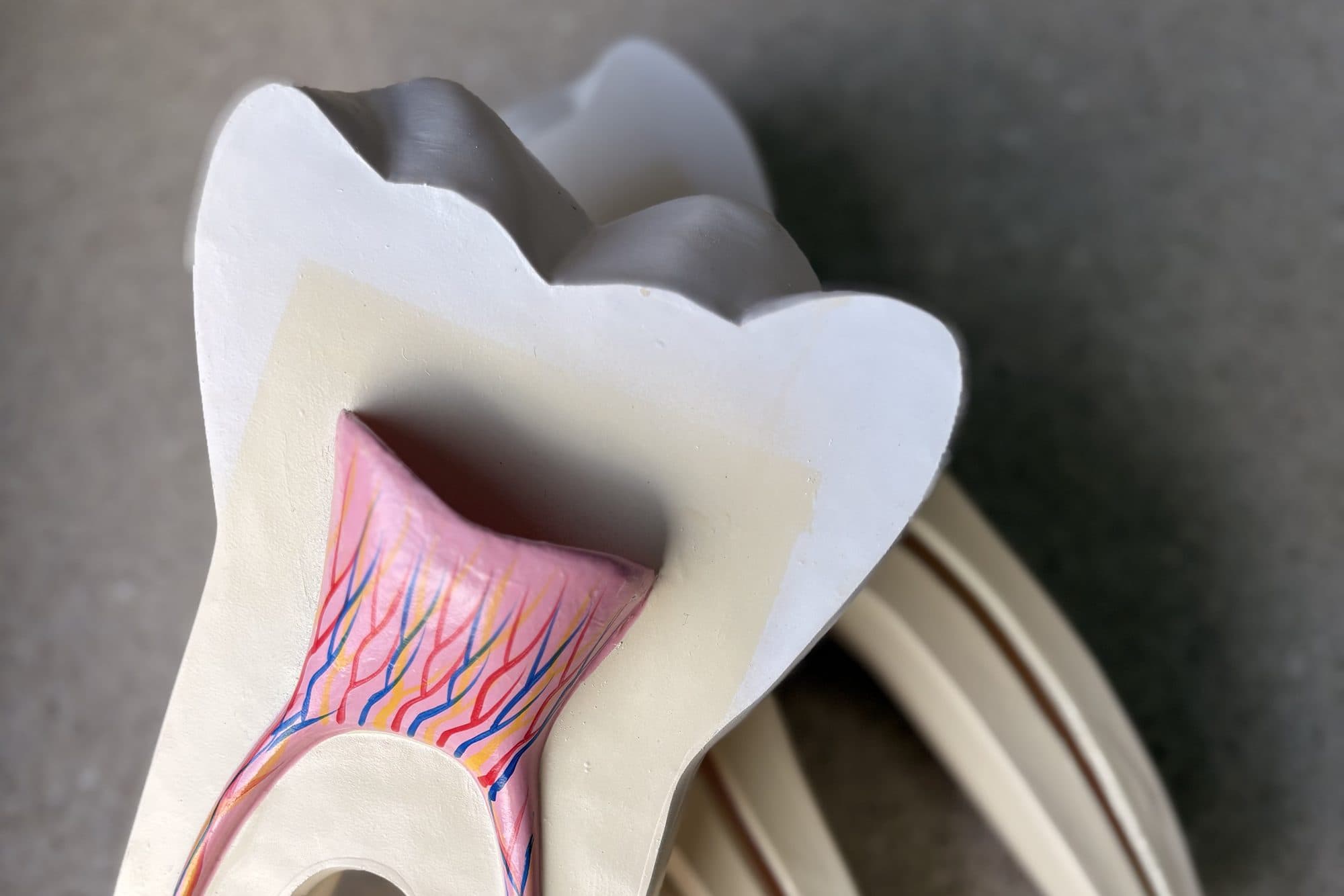
Porcelain veneers
Although fine, these shells of porcelain become strong and durable once bonded onto the front surface of your teeth. Porcelain veneers can give you a noticeably different smile in as little as two appointments, with little disruption to your natural tooth surface.
Preparation is the key to success and requires clinical precision. Similar to receiving a crown, the tooth is reshaped and a small amount of enamel removed so the veneer can bond correctly at the gum line. That, together with correct colour choice, is what helps them look natural.
Following preparation, a moulded impression is made and sent to a dental laboratory for fabrication. At your next appointment the veneers are placed over the prepared teeth and adjusted for comfort and fit at the gum line before being securely bonded.
Composite veneers
Composite veneers are built up directly onto the tooth and shaped by hand in the chair, usually in a single appointment.
Which suits you depends on your teeth, what you want to change and your budget. As with all dental procedures, Caitlin will conduct a thorough oral examination to assess the most suitable option — including whether veneers are the right answer at all, since sometimes whitening or a simple reshape does what you were hoping for.
Getting the detail right
Shade matching is done in natural light and checked against the teeth either side.
Shape and length are planned around your face and your bite rather than to a template, and appointments are unhurried. If you need to stop, look in the mirror and think about it, that is a normal part of the process.
Looking after them
Even though your veneers are high-grade porcelain, your gums and supporting teeth are still susceptible to decay. Brushing twice a day with a soft bristled toothbrush and flossing or using an interdental brush once a day, will keep them in good condition and help prevent gum disease.
The Fresh Dentistry team can advise you on effective cleaning techniques.
Worth knowing
- Porcelain veneers involve removing a small amount of enamel, which cannot be reversed.
- Composite veneers may need occasional polishing or repair and can pick up staining over time.
- Veneers do not change colour with whitening, so any whitening is done first.
- Healthy teeth and gums come first — decay or gum problems are treated before cosmetic work.
- Outcomes vary between people.
Start with a consultation
Caitlin will look at your teeth, talk through options and go over costs before anything is decided.
Book a consultation